
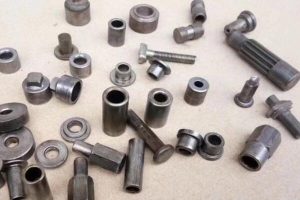
Special-shaped bolts and screws are widely used in mechanical manufacturing. These custom fasteners differ from standard off-the-shelf parts and can be produced with cold heading equipment. What is the principle behind the process?
How Cold Heading Works
Cold heading forms metal under pressure using tooling designed for the required shape and dimensions. The material undergoes plastic deformation within the tooling.
The process is suitable for precision, high-strength components such as bolts, nuts and pins. Forming without the heating used in hot forging helps avoid high-temperature oxidation and discolouration.
The Manufacturing Process
1. Design and manufacture the tooling to the component specification. The tooling is installed in the appropriate stations of the cold heading machine for automated batch production. Tool material and strength are important to process reliability.
2. Select suitable feedstock, commonly stainless steel or carbon steel in wire or bar form. The material is fed into the machine and formed to the specified geometry.
3. Apply controlled forming pressure through the machine and tooling. The metal changes shape under load, and cold working can increase strength and hardness. The original article describes this stage using rollers and die openings; the actual forming sequence depends on the equipment and part design.
Advantages of Cold Heading
Cold heading produces the required geometry through plastic deformation. Appropriate process control can improve material structure and physical properties while producing the desired shape.
Well-controlled forming helps produce dense components with a favourable strength-to-weight ratio. Material quality and process inspection remain important for controlling internal defects.
The process is generally carried out at room temperature. Avoiding high-temperature softening can help maintain dimensional accuracy and achieve the required finished properties.